
What is a company mascot?
A mascot is a friendly character representing a brand, created to strengthen a company's image and visual identity. It often takes the form of an animal, a fruit, or a completely original imaginary being. It is generally anthropomorphic, meaning it has human-like features or behaviors.
A brand mascot is a way to personify the company and make it more relatable. This is referred to as the embodiment of the brand.
The first mascots arrived in the United States in university sports clubs, where they are still present today. This phenomenon is now developing in France. Many sports clubs across all disciplines feature a sports mascot. They are also very common in theme parks (for example, Walibi, which represents a wallaby) and holiday resorts. They exist in various forms: plush mascots, inflatable mascots, human-like mascots , etc.
Regardless of the medium, its representation generally allowsthe company to be identified at a glance. A very useful marketing tool in an era where advertising spots are no longer effective.
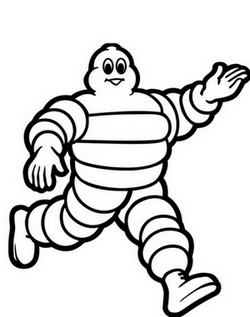
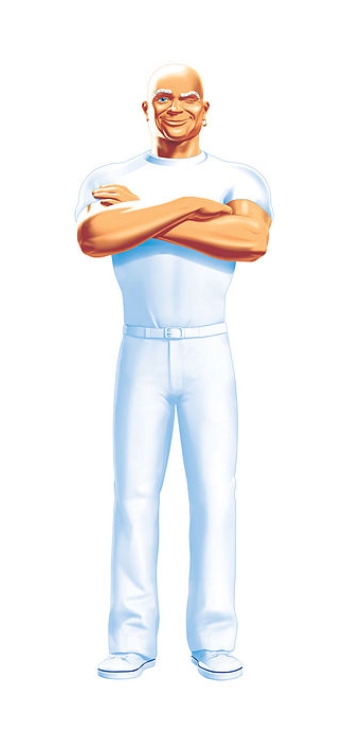
Over the years, consumers tend to become attached to brand mascots. And little by little, they become a strong element of a company's reputation, even going so far as to take on part of its DNA (like the Michelin Man or Mr. Clean).
Advertising mascots are also widely used to target children who are more impressionable.
To project a positive image of the company:
The purpose of a company mascot is toincrease brand awareness by showcasing the company from a different perspective. The iconic character brings a friendly, familiar, and more accessible feel. It helps bridge the gap between the consumer and the company.
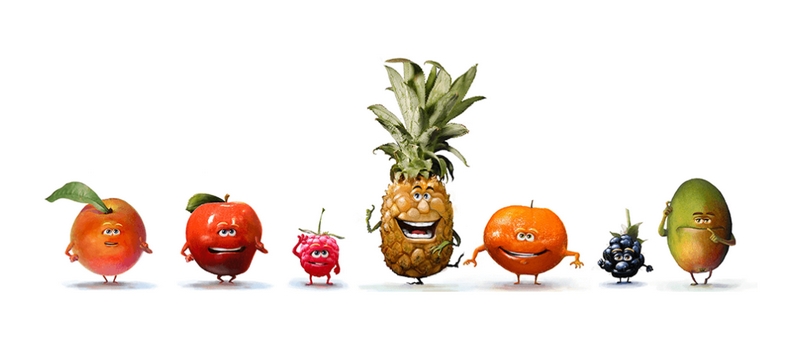
The chosen characters are often "cartoonized," meaning transformed into animated (like the personified fruit characters of Oasis) to create a sense of closeness and familiarity with the consumer.
It's worth noting that all existing mascots share a strong common thread: a smile. It's fundamental!
We easily trust a plush mascot whose appeal is instinctive, like a cute, smiling panda with a positive personality. Empathyis also a key communication tool for making a mascot attractive.
The mascot: A valuable aid in brand memorization
The mascot adds an extra distinctive element to the brand.
Generally speaking, it's easier to remember a character's face or silhouette than a brand name. This helps us better understand the mascot's number one power!
Furthermore, the character integrated into your brand guidelines allows for more graphic, visual and dynamic creations with a more direct language, further strengthening the memorability of the advertising mascot and the impact of the communication.
The brand mascot: The alter ego and trusted spokesperson.
It has been shown that using a character to convey an advertising message makes it more relevant. Commercial messages are indeed better received when delivered by an innocent and reassuring figure. In this case, it's not the brand itself speaking, but a charming and engaging intermediary who inspires more trust than its parent company. A facilitator who reduces mistrust.
This exclusive representative allows for a closer relationship with customers. The company mascot thus creates a fundamental element: proximity to consumers , generating trust.
This proximity allows for the use of simpler and more direct language. The result is advertising messages that are more impactful and easier to understand and remember.
A brand mascot thus creates a true spokesperson and breaks down the purely commercial relationship between a brand and its consumer. It also adds an emotional dimension to the relationship, an essential factor in building attachment and trust.
Trust in a brand is very important when the company distributes dangerous or polluting products or when it handles sensitive information.
The mascot also creates a " weight of absence ." In other words, once attached to an iconic character , consumers are more bothered by the brand's disappearance. This is even more true for children, who become even more attached than adults to favorite characters or animals .
Children's brand mascots:
For impressionable children, a mascot stimulates their imagination. It becomes a true everyday friend. They tend to see it as a cartoon hero. And over time, this fictional character enters the collective unconscious of an entire generation. It's no coincidence that many brands targeting children use advertising mascots.
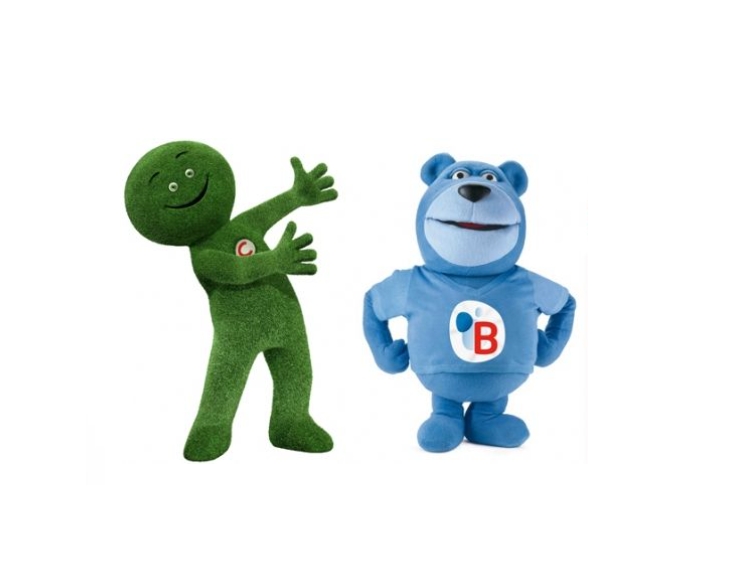
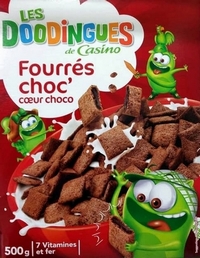
For private label brands, supermarkets have replaced paid licenses like Looney Tunes or Disney with custom-designed mascots. For example, Les Doodingues at Casino or Mat & Lou at Système U.
Carrefour Kids replaced Disney's Mickey Mouse with "Les P'tits Monstres" (The Little Monsters), and Leclerc created Mark's.
A custom mascot also serves as a segmentation tool , allowing you to target a specific audience simply by choosing a character type. For example, superheroes with superpowers are better suited to children aged 4 to 8.
It also serves as a landmark on supermarket shelves, for example, the Doodingues branded product references at Casino, with their green packaging featuring very particular characters, can be immediately identified in the different aisles (yogurts, cakes, fruit juices, cereals, etc.).
The French people's favorite mascots:
Older mascots are the easiest to name because they are deeply ingrained in the collective unconscious , like the Michelin Man , the Duracell bunny , or Mr. Clean . However, they are not necessarily the most popular with the general public.
For many years, it was "yellow" and "red", the iconic M&M's characters, that were the favorite characters of the French.
Here is the latest known ranking to date:
In terms of brand awareness:
Mr Propre at 98%
Le Bibendum Michelin at 96%
La Vache qui Rit at 95%
Crédito de Cetelem at 94%
M&M's at 92%
In terms of preference:
M&M's is the consumers' favorite mascot with 58% of the votes.
Milka Cow: 2nd place (51%)
Laughing Cow: 3rd place (50%)
Cajoline: 4th (48%)
Spontex: 5th (42%)
A friendly brand representative to stand out:
In an era where the increasingly educated consumer knows how to recognize the classic methods of advertisers, the advertising mascot can still play an important role.
While we usually change the channel when an ad comes on in the middle of a movie, a commercial featuring a mascot as the main character is watched much more often. We even enjoy discovering the latest adventures of Mr. Cetelem, the Oasis fruit characters, or M&M's candies.
The advertising character greatly helps to make people want to watch a brand's commercial and therefore to get its advertising message across.
In general, the mascot helps to identify and differentiate the brand thanks to its iconic character.
The impact of the advertising mascot's character on the brand:
The mascot's personality partly influences the brand. It embodies the brand and carries some of its values. That's why you need to be careful in your communication about it.
However, now that you have a mascot, you will need to give it adventures and a real personality, otherwise it will have nothing to say and its character will remain too bland, or even uninteresting.
The fact that it departs from the brand's traditional editorial line is a good point in showing that it exists on its own merits. And this will help to increase consumer loyalty.
Of course, the mascot will have friendly and fun features and a likeable personality, but that won't be enough to make it stand out and generate buzz.
One solution could be to give it a small physical or moral flaw to give it unique characteristics and make it original.
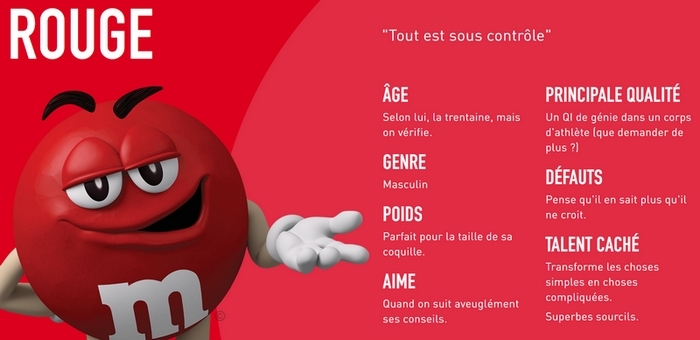
Some brands have used the anti-hero approach or a character with an unconventional personality, which is rather cool, like the M&M's characters.
One of the most important keys is to use humor to make people want to see the best representative of the company in future communications, as Oasis, Orangina, or M&M's do.
In all cases, a company mascot allows you to move away from the purely corporate andhumanize the company's brand image.
The 6 M&M's characters each have their own personality.
What are the gains in terms of image and sales?
The Frédéric Mistral circle study examined 15 pairs of brands located in the same sector, with each pair consisting of one brand with a personalized mascot versus a competing brand without a mascot.
The results show that the mascot has a greater than 10% impact on purchases from the brand.
The company's image is also slightly improved in terms of authenticity, familiarity, and approachability.
The primary benefit lies in the improved engagement rate.
A study conducted by Opinion Way revealed thata mascot increases consumer engagement with a brand by nearly 43%. However, this rate varies considerably depending on the sector. The highest rates are observed among brands in the service sector.
This impacts both impulse buying and consideration for future purchases. One direct consequence is increased sales.
Brand engagement rate here refers to the concept of attachment, of preference for a brand that fosters loyalty. It does not refer to engagement rate, the recent definition of which relates to the notion of involvement or interaction with a brand on social media.
Between two competing brands, the one with the highest engagement rate will be preferred and will benefit from the sale.
This relates to the concept of brand loyalty. When a customer has the opportunity (and a good reason) to choose another brand, they still continue to choose yours!
This helps us better understand the value of creating an emotional connection through a personalized mascot for your brand!
Additional sales through derivative products:
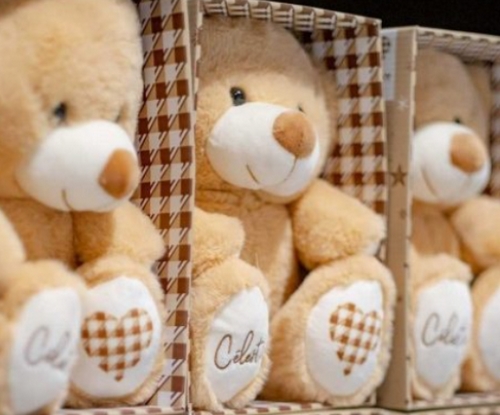
Another way to increase sales is to create a branded merchandise character for your company and sell it online or in physical stores. Take Célestin, for example, the plush toy custom-made to become the personalized mascot of the city of Vichy . This promotional plush toy is sold as a souvenir at the city's Tourist Office.
What are the risks and dangers of communicating via a mascot?
Beware of replacing mascots mid-course; Malabar paid the price. The cat Mabulle, who replaced the late Monsieur Malabar, failed to prove himself, and internet users did not hesitate to make their feelings known and reject him en masse.
To avoid backlash, since a mascot change can be too abrupt, it's better to evolve the character gradually, even if it ends up looking nothing like the original mascot after a few years.
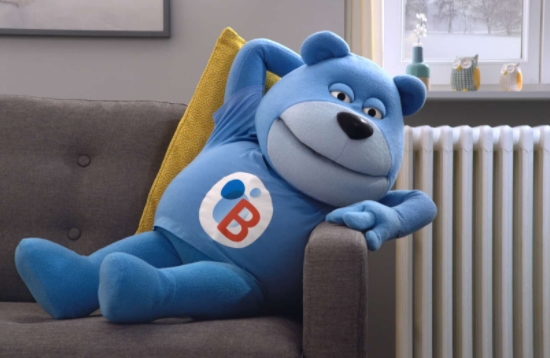
This is the case with Butagaz's blue icon, which started as a personalized teddy bear and became a large, very mischievous, digitally rendered bear.
At Nesquik, Quicky replaced Groquik in 1990, which was no longer in vogue with its overly large waistband, but Quicky wasn't exactly a success.
Nesquik waited until early 2020 to introduce Quicky on its social media. "
It was the lockdown that triggered a real realization of the importance of recreating a close connection and interaction with the brand's fans," explains Matthieu Manigold, Nesquik's brand manager in France.
Evolving one's mascot is therefore a delicate exercise. It must remain relevant and timeless across eras and adapt to societal changes. Banania suffered from its mascot's references to colonial history.
Conclusion :
For easier brand recall, consider a mascot!
A mascot is not simply a lucky charm associated with the company logo; it becomes part of the brand's image in the media. It enriches the brand image in terms of consumer relationships and influences brand affinity , advertising perception , brand accessibility , and a sense of connection . The direct positive implications of using a mascot are increased visibility , simplicity , immediacy , and memorability .
The impact is also felt in terms of brand awareness and trust by fostering brand loyalty and a more pleasant customer experience.
It is one of the key drivers of higher customer engagement.
The mascot is a true marketing tool to establish a brand's positioning and a powerful differentiator to become permanently anchored in the minds of consumers.
Product by PELUCHE CREATION
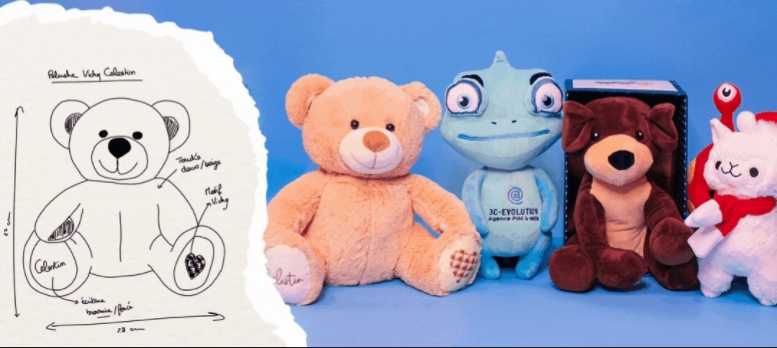
Manufacturer of custom-made plush toys, advertising mascots and personalized plush toys for businesses and associations.
Discover our custom-made plush mascot creations, created from a simple sketch..
As well as our entire range of customizable plush toys.
For example, you will find the following customizable plush animals: Animal mascot, logoed plush dog, customizable husky plush, plush panda, personalized teddy bear, customizable cuddly toy, rabbit with logo, personalized lion, promotional plush tiger, squirrel…etc.
Are you a company or association looking for a custom-made promotional plush toy or mascot that reflects your brand? Contact us! We can bring your project to life and create a personalized plush toy that aligns with your values and CSR policy.
0 comments